Capture of any Iranian island will be extremely costly and fatal to US
TEHRAN - While the United States boasts some of the world's most advanced military technology, operating close to Iran's coastline presents a formidable challenge; Tehran can rapidly mass large numbers of relatively inexpensive drones and missiles near its own shores.
Crucially, this geographic advantage means that if American ground troops were ever deployed, they would effectively become sitting ducks for Iranian forces, who are lying in wait and ready to hunt them down.
The first option is to capture or blockade Kharg Island, which is of immense strategic importance to Iran. Roughly 90 percent of Iran's crude oil exports are shipped through this island.
Kharg Island is located in deep waters, allowing large oil tankers to dock there. Much of Iran's coastline, by contrast, cannot accommodate such large vessels, although smaller tankers could still continue exporting limited quantities of oil.
Mark Cancian, a senior adviser at the Center for Strategic and International Studies and a former U.S. military officer, argues that given the overwhelming capabilities of the U.S. Navy and Air Force, capturing Kharg Island would be militarily feasible.
However, retired Vice Admiral Robert Harward, former Deputy Commander of U.S. Central Command, warns that holding the island afterward could become a nightmare for the United States. According to Harward, once American troops are stationed there, they would become easy targets. Iran could launch thousands of inexpensive drones and missiles from its nearby coastline, overwhelming American air defenses and striking the small island repeatedly. Another important consideration is the political dimension.
Some political analysts argue that President Trump would seek to avoid damaging major oil facilities because doing so would drive up global oil prices. Consequently, protecting those facilities throughout the conflict would become extremely difficult. Even Mark Cancian, despite believing that the island could be captured, concludes that keeping American troops stationed there would be extremely dangerous. For that reason, he believes the operation would ultimately create more costs than benefits.
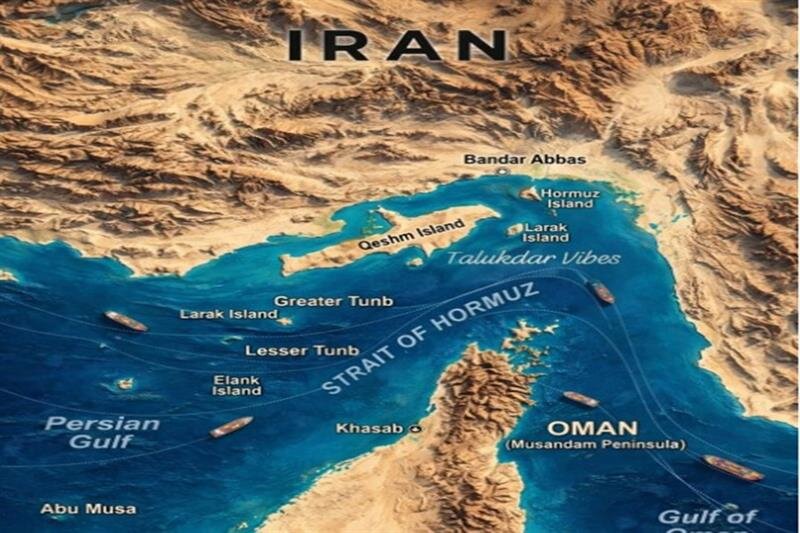
The second proposal involves attacking Larak Island, located at the narrow entrance to the Strait of Hormuz. The island's mountainous terrain plays a significant defensive role. Iran has reportedly constructed hardened underground bunkers inside the mountains, where it has deployed anti-ship missiles and radar systems. Experts at the U.S. Naval War College argue that because these Iranian weapons are deeply buried underground, destroying them would require the United States to expend missiles that are many times more expensive than the targets themselves, making such an operation highly costly.
Milan Vego, a noted naval historian and strategist, writes that if American warships approach Larak Island, they would come within close range of Iran's coastline. This would eliminate the advantage of conducting long-range strikes and expose U.S. vessels to attacks from Iranian coastal missile batteries and fast attack boats. Moreover, any large American destroyer entering the area would almost certainly be detected by Iranian radar systems, and Iran also benefits from intelligence provided by Chinese and Russian satellite networks.
Based on these considerations, both Milan Vego and experts at the Naval
War College conclude that this plan is essentially impractical because the expected human and financial costs for the United States would be extremely high.
The third option involves seizing Abu Musa, Greater Tunb, and Lesser Tunb, islands located directly along the shipping lanes through the Strait of Hormuz.
Brandon Carr, a researcher at the Quincy Institute for Responsible Statecraft in Washington, argues that American commandos could likely remove Iranian forces from these islands through overwhelming firepower. However, he believes maintaining control afterward would become an enormous challenge. Even after capturing the islands, the United States would gain very little military advantage.
According to Carr, one of the basic principles of warfare is that forces unable to receive continuous reinforcements and supplies, or lacking hardened defensive positions, become highly vulnerable. Under such circumstances, American troops stationed on the islands would become easy targets for Iranian missile strikes and drone attacks. Meanwhile, Michael Knights, a military analyst at the Washington Institute for Near East Policy, argues that these islands could be captured and subsequently transferred to the United Arab Emirates, providing Washington with diplomatic benefits. After weighing these competing views, Brandon Carr concludes that although such an operation might achieve short-term success, maintaining control even for several weeks would be extremely dangerous. To keep American troops alive, the United States would need to deploy a large and costly defensive system, while gaining relatively little strategic benefit in return.
The fourth proposal involves intercepting or seizing Iranian oil tankers in the eastern section of the Strait of Hormuz. According to this commentary, similar measures were employed during previous periods of naval blockade against Iran. Retired Admiral James Stavridis, former Supreme Allied Commander of NATO, argues that in the open sea the military balance shifts significantly in America's favor. In open waters, the United States can fully exploit its long-range radar systems, aircraft carrier strike groups, advanced surveillance networks, and modern naval capabilities.
After two decades of war in Afghanistan, the United States learned that changing a country's government and politically controlling that country are two very different objectives. In Iran's case, the challenge becomes even more complex. Iran is not merely a state; it is a civilization with an ancient identity, a strong sense of national consciousness, and revolutionary state institutions that have developed over several decades. For this reason, some military experts argue that the central question in any war against Iran is not how much destruction the United States can inflict, but rather what it can ultimately achieve after that destruction. This leads to the fundamental issue of the end state of a war. Every successful military campaign requires a clearly defined end state.
In American military doctrine, the term "end state" refers to the desired political and strategic conditions after the fighting ends. What will the situation look like once the war is over? Will the enemy's government be replaced? Will its military programs be dismantled? Will its policies change? Or is the objective merely to punish the country by inflicting destruction through military strikes? Without a clearly defined objective, even the most powerful military can become trapped in a conflict with no clear conclusion.
This is precisely the debate surrounding Iran. If the United States intends only to degrade Iran's military capabilities through air strikes, the obvious question is: What happens afterward? If Iran rebuilds its missile program, restores its military capabilities, continues expanding its nuclear program, and refuses to alter its core policies, can the operation truly be considered a success? If Washington seeks to go further and replace Iran's political system, does it possess the necessary military, political, and economic resources to accomplish such a goal? It is worth remembering that during the 2003 invasion of Iraq, the United States deployed between two hundred thousand and three hundred thousand troops. Iraq, however, was only about one quarter the size of Iran. This question matters because the most difficult phase of war is often not launching the attack but managing the consequences that follow. After the Second World War, the United States successfully occupied Germany and Japan. However, those cases occurred under entirely different historical circumstances. Both countries had suffered total defeat, making political reconstruction possible in an international environment that was fundamentally different from today's. Iraq and Afghanistan demonstrated just how difficult regime change has become in the 21st century. Iran presents an even greater challenge because it possesses strong state institutions, a large population, vast territory, and considerable regional influence.
Moreover, any major conflict involving Iran would place global hydrocarbon supplies at risk. If such a war continued, worldwide supplies of oil and natural gas could be severely disrupted. According to this analysis, approximately 17 percent of the world's oil and gas consumption originates from this region. Against this backdrop, some experts categorize a potential U.S. military operation into three escalating levels.
The first level consists of limited operations, including missile strikes, attacks on critical infrastructure, and the destruction of selected military facilities. The second level involves limited ground operations, such as seizing an island, a port, or another restricted area to use as leverage during negotiations. The third and most difficult option is a full-scale ground invasion, involving large military intervention with the objective of occupying extensive territory and maintaining long-term control.
With each successive level, however, the risks increase substantially. Limited strikes often fail to compel the opposing side to change its behavior and may instead provoke even stronger retaliation, which, according to this commentary, is already occurring. Limited ground operations present another challenge. Capturing territory and successfully holding it are two entirely different tasks. A full-scale invasion, meanwhile, could initiate a war whose ultimate outcome remains highly uncertain.
For this reason, viewing the Strait of Hormuz merely as a naval issue would be a mistake. The Strait represents the intersection of military power, geography, economics, politics, and political will. If a country possesses the ability to exert pressure on a location that is indispensable to the global economy, as Iran is argued to do through its position at the Strait of Hormuz, then its power cannot be measured solely by the size of its military budget. At this point, another important strategic concept comes into focus: strategic depth. Strategic depth refers to the extent to which a country possesses sufficient territory, resources, population, resilience, and political will to absorb initial losses while continuing to fight over an extended period. According to some analysts, Iran's greatest strategic advantage lies precisely in this capacity. Even after suffering significant damage, it may still be able to sustain prolonged resistance. The latest phase of the conflict shows both sides locked in a strategic stalemate.
The United States cannot achieve a decisive military victory without a perilous ground invasion, a step its allies have refused to support. Meanwhile, Iran can sustain pressure, maintaining the Strait as a point of leverage. The core question is no longer who will win at Hormuz, but how long the world must bear the costs of a conflict where the United States has fundamentally underestimated its adversary's strategic depth, resilience, and ability to change the very rules of the game. When a nation's survival is at stake and its leadership views the conflict as existential, statistical comparisons of military hardware become meaningless. Iran has transformed its geographical position into an impenetrable strategic asset, ensuring that any victory for its adversaries will be Pyrrhic at best. The United States may win battles, but it cannot win the war, for the simple reason that Iran has already changed the battlefield itself.
The United States learned this lesson in Vietnam, Iraq, and Afghanistan: overwhelming force cannot compel a nation that refuses to submit.
The Strait of Hormuz will not be won by aircraft carriers or stealth bombers. It will be defended by geography and a will that no bomb can destroy.
As Supreme Leader Mojtaba Khamenei stated on Saturday, July 18, 2026: "Repeated U.S. breaches of a memorandum of understanding signed by the Presidents of Iran and the United States had shown that President Donald Trump's signature was utterly worthless and devoid of credibility."
When the American president's word carries no weight, what remains of American power? The United States came to dominate this region; it will leave humbled. It came to impose its will; it will depart with its signature—once feared—now meaningless against a nation that refuses to bow. The Strait is Iran's destiny and Washington's grave. America came as an empire; it will depart as a humiliated memory.
Prominent Prussian general and military theorist Carl von Clausewitz taught that war is fought to achieve political objectives. If those objectives remain beyond reach, then even the greatest military campaign becomes a strategic defeat.
Leave a Comment